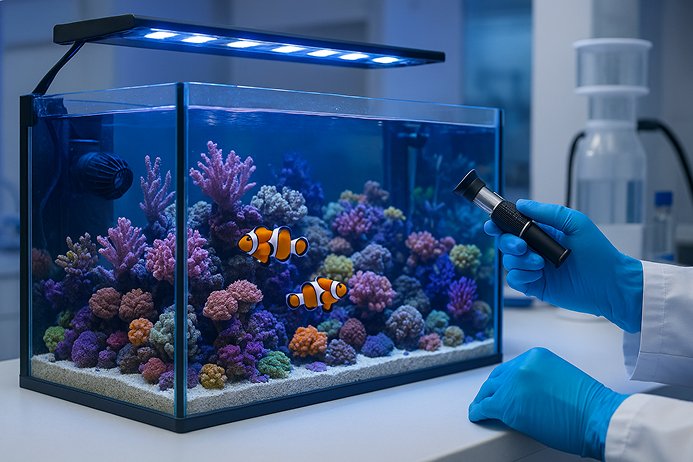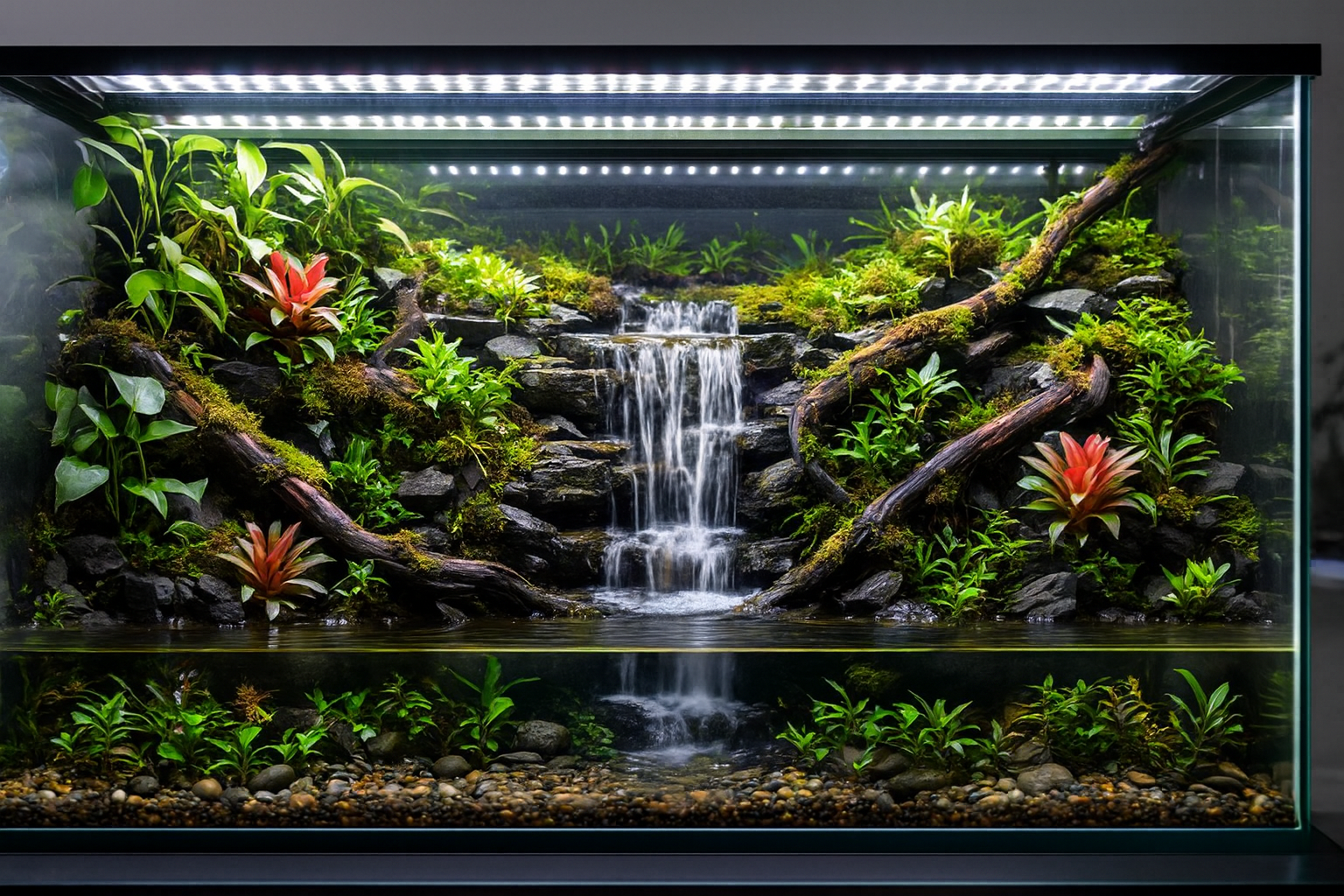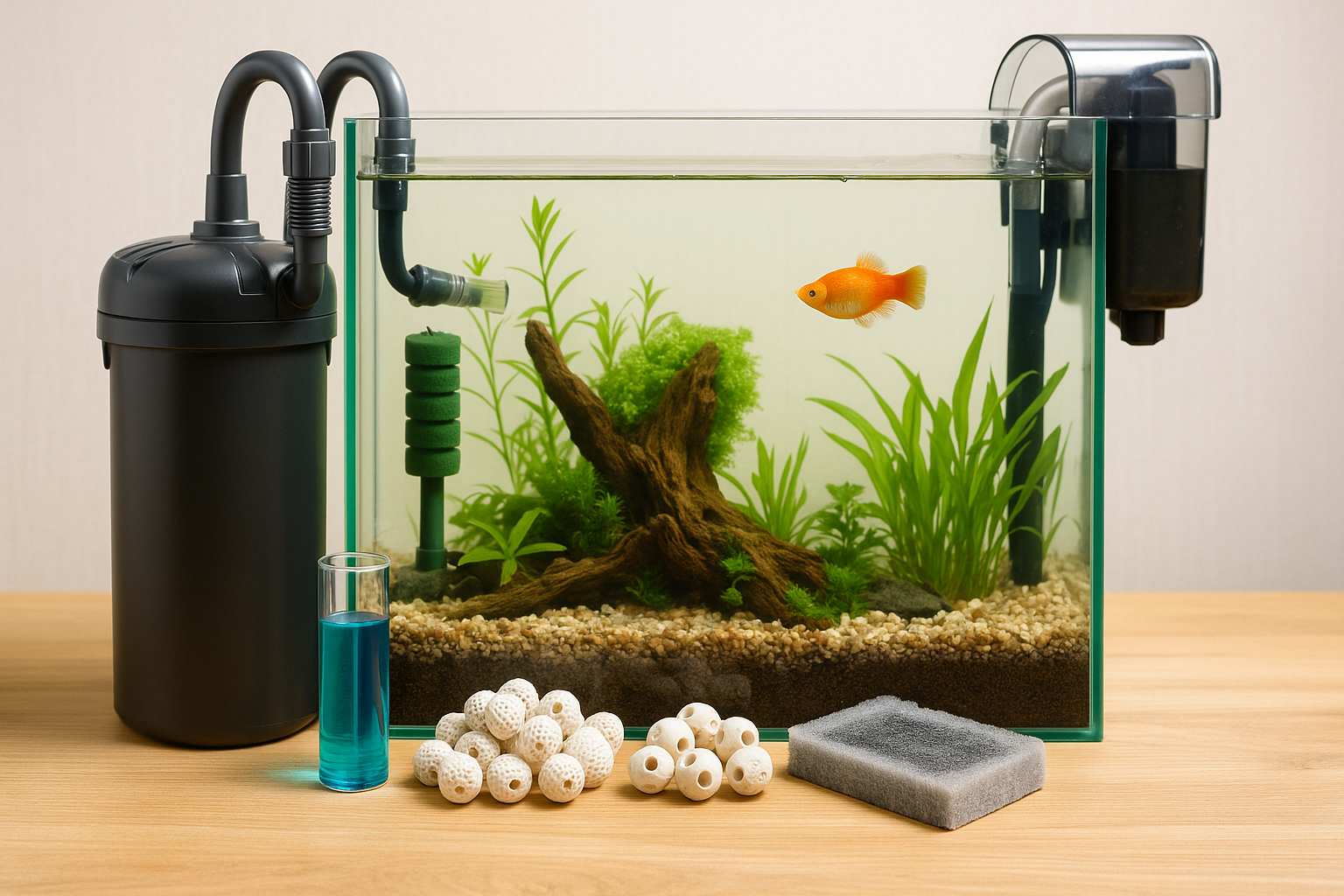
A healthy aquarium depends on more than plants, fish, or good decoration — it relies on proper filtration. Filtration is the heart of any aquatic system, continuously maintaining clean, stable, and balanced water conditions for fish, plants, and beneficial microorganisms.
Whether you're maintaining a freshwater or marine setup, understanding filtration helps prevent common problems like cloudy water, ammonia spikes, algae growth, and stressed fish.
Why Filtration Matters
An aquarium filter does more than remove visible dirt — it supports the entire ecosystem by:
- Removing harmful toxins and waste
- Providing oxygen and stable circulation
- Creating a habitat for beneficial bacteria
- Maintaining clear and healthy water for fish and plants
Simply put — without proper filtration, an aquarium cannot remain stable long-term.
The Three Types of Filtration
A complete filtration system uses three key processes:
| Type | Function |
|---|---|
| Mechanical Filtration | Removes debris like uneaten food, waste, and plant matter |
| Biological Filtration | Uses beneficial bacteria to break down harmful ammonia and nitrite |
| Chemical Filtration | Uses materials like activated carbon to remove odors, toxins, and discoloration |
All three work together to create a stable, self-supporting aquatic ecosystem.
Step 1: Choose the Right Filter Type
Different aquariums require different styles of filtration. Common options include:
- Sponge Filters — ideal for small tanks and breeding setups
- Hang-on-Back Filters (HOB) — easy to use and good for beginners
- Internal Filters — compact and suitable for planted tanks
- Canister Filters — best for larger or heavily stocked tanks
- Sump Filtration — advanced option for marine and high-volume systems
Select a filter based on your tank size, livestock, and maintenance preference.
Step 2: Understand the Nitrogen Cycle
Filtration supports the nitrogen cycle — a natural process where beneficial bacteria convert toxic waste into safer forms.
- Fish waste releases ammonia (toxic)
- Bacteria convert ammonia to nitrite (still toxic)
- Another group converts nitrite to nitrate (less harmful)
Maintaining this bacteria colony is essential for long-term stability.
Never wash filter media under tap water — it kills beneficial bacteria.
Step 3: Maintain the Filter Properly
Filters don’t clean themselves — consistency keeps them efficient.
Weekly or Bi-weekly tasks:
- Rinse sponges using tank water (not tap water)
- Check water flow and remove blockages
- Replace chemical media every 3–6 weeks
- Clean tubing and impellers if flow decreases
A well-maintained filter keeps oxygen levels steady and biological systems thriving.
Signs of Good Filtration
- Clear water with no odor
- Stable ammonia, nitrite, and nitrate readings
- Healthy plant growth and active fish behavior
- Steady water flow without sudden slowdowns
When filtration is working correctly, the aquarium becomes a stable ecosystem with minimal intervention.
Sustainability Tips
- Use reusable sponges and biomedia to reduce waste
- Choose energy-efficient pumps and filters
- Avoid overfeeding — excess food clogs filters
- Stock fish based on tank size to prevent overload
Responsible filtration reduces maintenance effort and supports a thriving, natural environment.
Want to Learn Aquarium Science and Water Management?
At TiCi Nature Academy, we provide hands-on training in:
- Aquarium filtration systems
- Water chemistry and testing
- Biological cycling and ecosystem balance
- Plant and fish care methods
- Real filtration setup and troubleshooting
Whether you're a beginner or advancing your aquarium skills, our training helps you build long-term success.
Explore our course - Aquatic Ecosystem Expert
Final Thoughts
A healthy aquarium depends on understanding the science behind filtration. With the right equipment, routine care, and respect for the nitrogen cycle, you can create a stable and thriving environment for aquatic life.
Start simple, observe often, and let nature guide your aquarium’s growth.